This week’s topics are the biodiversity found in the oceans and food production. Two topics that are related to previous blog posts and are heavily intertwined with one another. It makes sense that the ocean is one of the most diverse biomes present on our planet, it is where life is theorized to have originated from. They have had the most time to diversify their populations and furthermore gave way to life on land. And unfortunately for the oceans, the second most complex social structures that the ocean’s paved the way for have not done much but hindered them. Humanity is the master of it’s ecosystems, they change the planet for their own benefit. We have devastated populations, communities, ecosystems, and entire biomes for resources. Arguably, the greatest resources we tear the planet up for is food, we need it to sustain our large population and just like many terrestrial ecosystems we harvest from the ocean too. But worse yet, what is likely our greatest sin against the origin of life is treating the ocean like our own trash can.

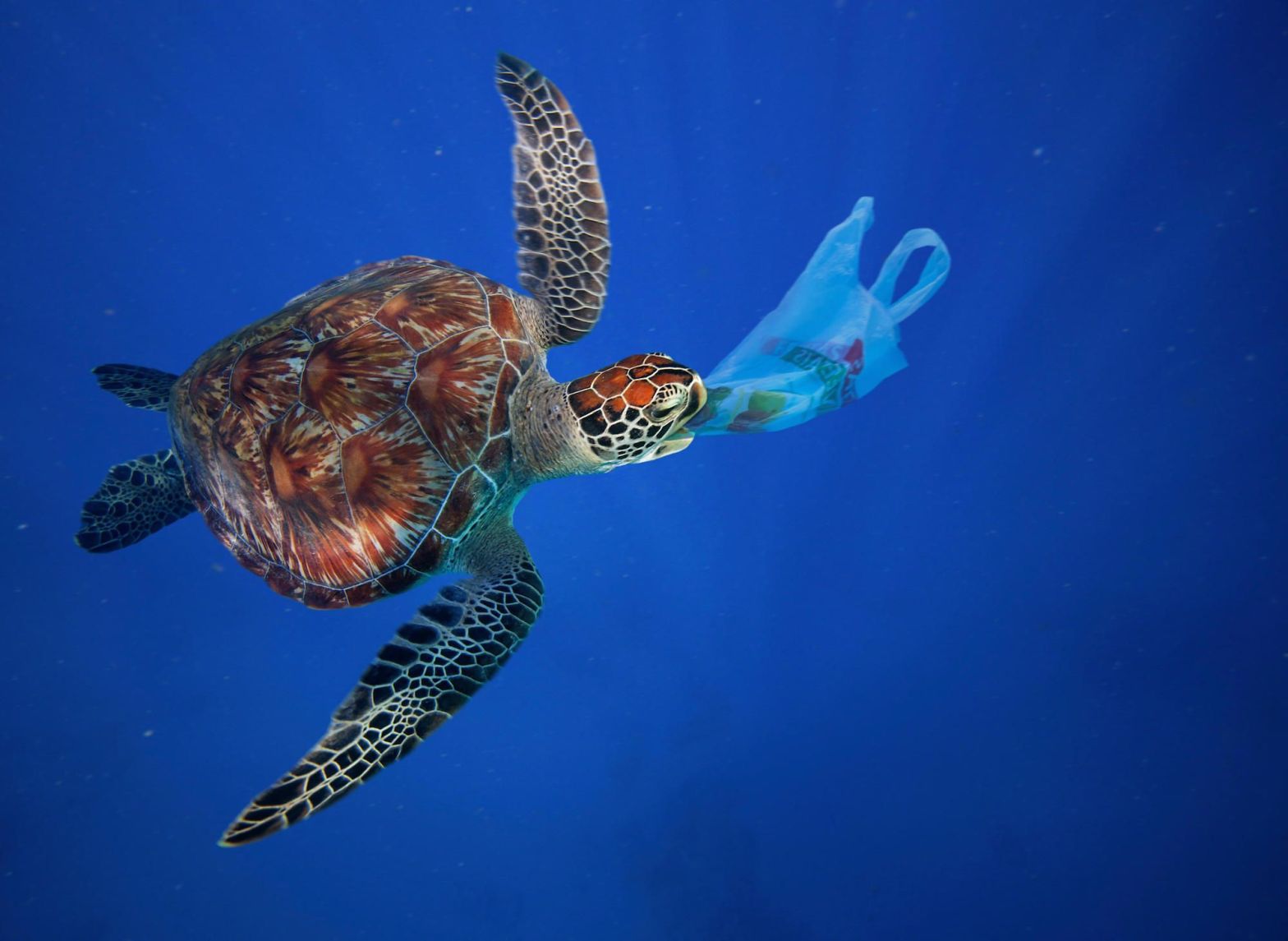
What looks like nothing more than a surface level problem is the greatest threat to biodiversity in the ocean. More so than over fishing and more so than mercury bio-accumulation. The image from national geographic is just a small part of the mass of plastic floating in the pacific ocean, the great pacific garbage patch is an area where the currents of the pacific ocean push debris into and it is an area of approximately 1.6 million square kilometers (1). Our pollution of the ocean has had impacts we never saw coming, as I have mentioned in previous blog posts, species that were completely unknown to us have been discovered to contain micro plastics embedded in their digestive tracts. What I find most terrifying about pollution is micro-plastics, and primarily because we are just beginning research on what effects ingesting micro-plastics will have on an individual animal or human. While I was on a car ride towards one of my research sites last week, I was speaking with some representatives from the Bronx River Alliance and the conversation ended up on micro-plastics and a specific Japanese study on Koi fish. One population of Koi fish were raised in a clean tank, as devoid of micro-plastics as possible, and the second population of Koi fish were raised in a tank with water purposefully containing micro-plastics. The study found three surprising results. The first was that the ingestion of micro-plastics had little to no noticeable impact on the digestion tract. The second was that the micro-plastics that were filtered through the gills showed clear signs of irritating the gills. Finally, the third was that the fish that were raised in water purposefully containing micro-plastics experienced altered hormone levels that disrupted their sexual reproduction cycles. Our pollution has left many macro-plastics out in the ocean that get consumed by aquatic organisms or they break down into micro-plastics and still end up being ingested.
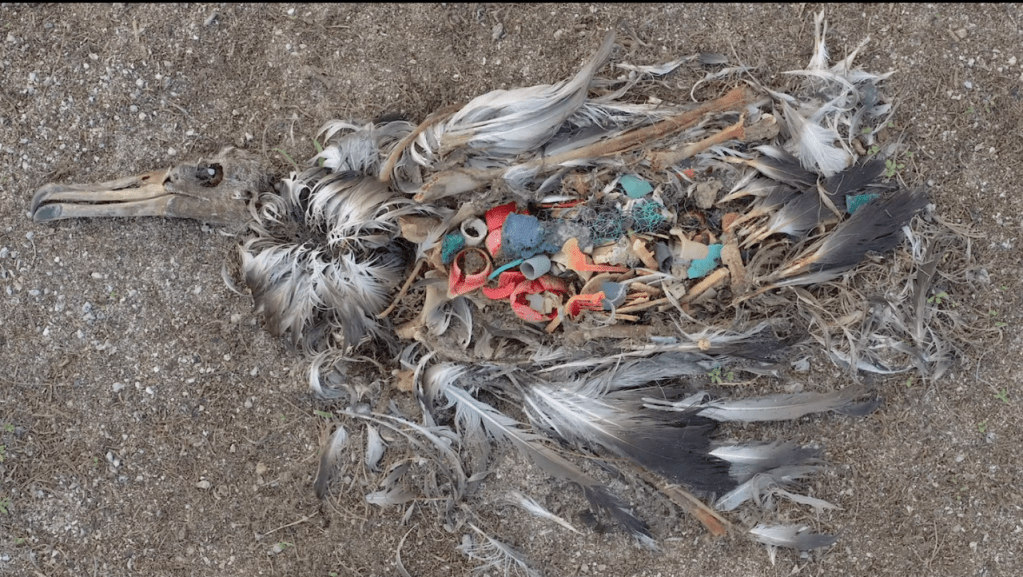
However, our actions have had other impacts on the ocean as well. Coral bleaching, ocean acidificiation, and another very threatening impact we have is greenhouse gases and particularly in regards to carbon based gases. The ocean is a natural carbon sink that helps balance the natural greenhouse gas emissions that are emitted through the natural process of the earth. However, human caused greenhouse gas emissions are overloading the ocean’s capabilities to function as a carbon sink and are eating away at the carbon available to bond with calcium to form calcium bicarbonate that certain animals need to form their shells. Instead the carbon bonds with oxygen and ends up as dissolved CO2 that doesn’t break down into carbon and oxygen. These threats are overwhelming our ocean ecosystem. But what can we do about it?
The textbook would make us believe that the best method is to enforce laws and policies that would create ocean reserves and mark areas as protected and to protect endangered ocean species. Miller also suggests that community based coastal waste management programs be started and supported (3). However, we all know it is not that simple. Most governments subsidize industries based on lobbyist interests and there would need to be some sort of strong economic incentive for the lobbyist and government to enact policies to protect the ocean and many communities suffer from littering which is something the common place individual does, can we really trust our communities to perform proper coastal waste management without incentive as well? To go further beyond why enacting policies would be difficult, I personally believe it is too little too late for plenty of the species in the ocean. It is impossible for us to remove the effects of pollution from the ocean, almost all fish are shown to contain mercury, an element lethal to living beings in high enough concentrations, and bio-accumulation will only worsen the effects of both of these pollutants. I believe that many of the ocean’s ecosystems will rapidly change as trophic levels of these ecosystems begin to disappear due to bio-accumulation.
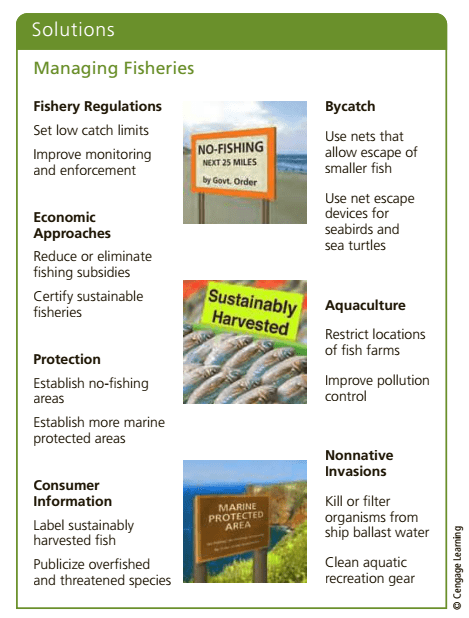
While the text fails to provide a solution to ocean pollution in my eyes, it does offer a proper solution to overfishing. Humans have also directly influenced many of the populations of wild fish in the ocean. From fish trolleys to fish farms we have driven many species of fish to the brink of extinction to sell in markets for people to eat (I find this severely ironic because we’re basically poisoning ourselves with microplastics and mercury but I willingly eat salmon so who am I to speak?). However, our fishing industry is largely inefficient and overly subsidized and likely would not be able to sustain itself without subsidies and if they didn’t receive them they would likely need to become ecologically sustainable. The following figure from the textbook shows many of the ways we could reasonably enforce sustainable fishing (3).
What we see in the grocery store has a bigger impact than what we realize. I’ve already mentioned in many of the previous blog posts about the many inefficiencies of farming. However, “…industrialized livestock production generates about 18% of the world’s greenhouse gases– more than all of the world’s cars, trucks, buses, and planes combined.”(3) Factory farming and general farming release methane into the atmosphere which is an incredibly powerful greenhouse gas. However, this also loops back to what I had mentioned earlier with carbonification. Methane is a carbon based gas that also will sink into the ocean and further contribute to carbonification and ocean acidification. Just like many of our other industries, the food industry also contributes to our devastation and destruction of the natural beauty of our planet.
Word Count: 1122
Bibliography
1- https://www.nationalgeographic.org/encyclopedia/great-pacific-garbage-patch/
2- https://www.albatrossthefilm.com/
3- Miller, George Tyler, and Scott E. Spoolman. Living in the Environment. 19th ed.
 Environmental Studies and Science